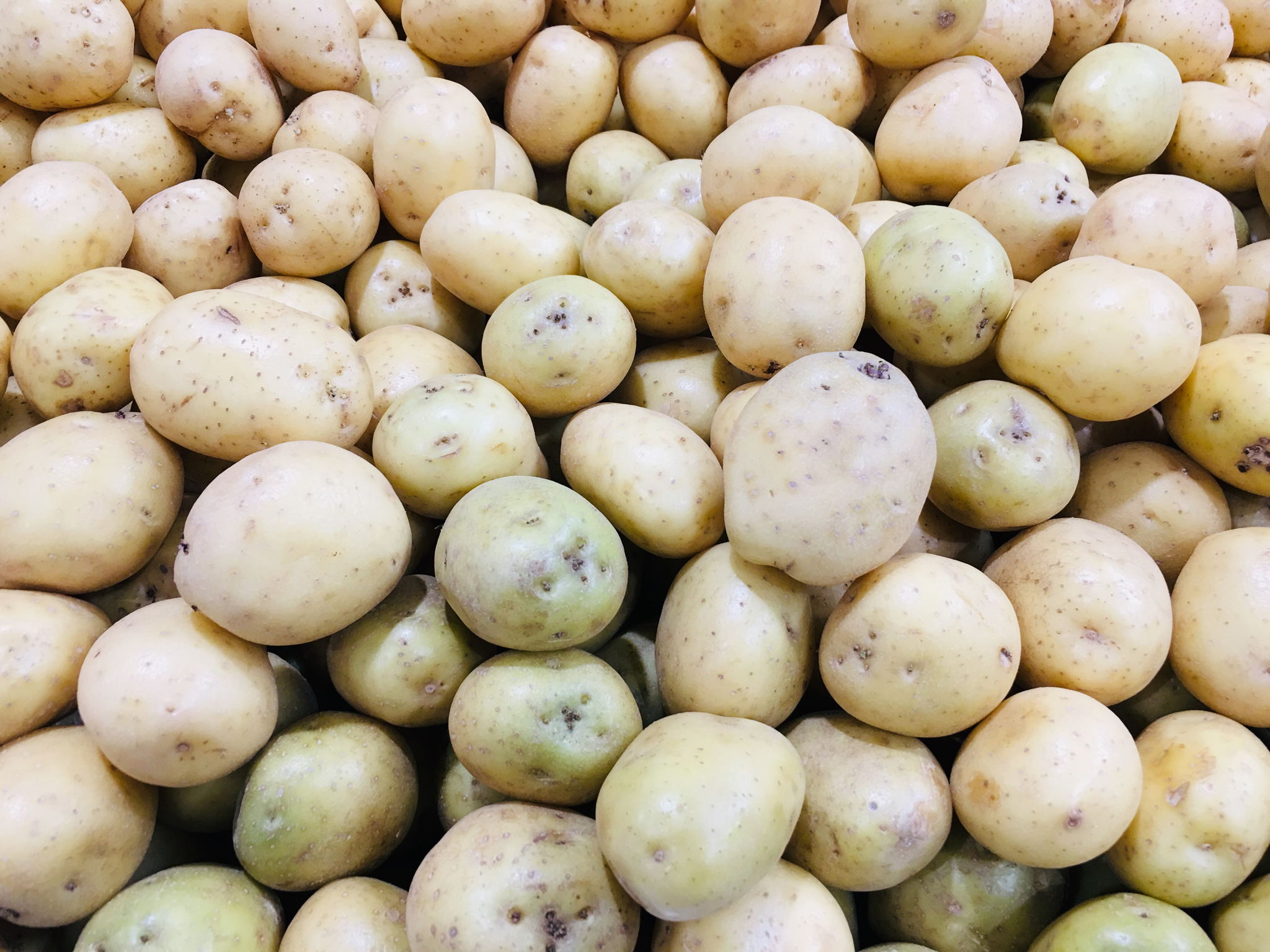
White Potato Production and Marketing Gets a Boost as OECS Commission Strengthens Regional Capacity
OECS Press Release
The Organisation of Eastern Caribbean States (OECS) Commission, in collaboration with the Government of the Commonwealth of Dominica, the Food and Agriculture Organisation of the United Nations (FAO), the Inter-American Institute for Cooperation on Agriculture (IICA), the Caribbean Agricultural Research and Development Institute (CARDI), and the World University Service of Canada (WUSC), convened a three‑day subregional workshop aimed at strengthening white potato production and marketing across the Eastern Caribbean.
The workshop, held from December 1-3, 2025, brought together approximately fifty technical officers, policymakers, researchers, farmers, and development partners from six participating countries and territories: the British Virgin Islands, Dominica, Grenada, Saint Kitts and Nevis, Saint Lucia, and Saint Vincent and the Grenadines.
White potato remains a major staple in the Eastern Caribbean, with the subregion importing 8,842 tonnes valued at USD $7.56 million in 2024. The workshop forms part of a broader regional effort to reduce import dependence, enhance food and nutrition security, and advance the OECS Food and Agriculture Systems Transformation (FAST) Strategy and the CARICOM “25 by 2025 plus five” initiative.

At the Second Special Meeting of the Council of Ministers: Agriculture (COM:AG) on 27 May 2025 in Costa Rica, a request was made to the Inter-American Institute for Cooperation on Agriculture (IICA) to support a training workshop in white potato production earmarked for the Commonwealth of Dominica.
In her remarks at the opening ceremony, Dr Renata Clarke, Sub‑regional Coordinator of the FAO, underscored the broader significance of the initiative stating:
“Your journey is not just about growing potatoes. It’s about creating opportunities, reducing vulnerabilities and strengthening economic and nutritional security for your communities.”
Representing IICA, Mr Gregg Rawlins highlighted the strategic value of the workshop for regional collaboration, noting:
“In addition to providing the space to generate and share knowledge on the commercial production of white potato, the workshop will also serve as a platform to develop a strategic framework for national and regional collaborative action on the development of white potato as a commercial commodity in the OECS countries.”
Delivering remarks on behalf of the OECS Commission, Dr Didacus Jules, Director General of the OECS Comission, emphasised the urgency of reducing external food dependence and accelerating agricultural transformation:
“For too long we have depended on external food sources—exposing our people, our economies, and our health systems to global supply shocks, high import bills, and the rising costs of living. The OECS Food and Agriculture Systems Transformation Strategy - FAST - is our ten-year roadmap to change that. It calls us to: Grow more of what we eat, Process more of what we grow, Trade more with each other, Strengthen resilience to climate change, empower youth, women, people with disability and rural communities, and create a modern, competitive agricultural economy. Today with this subregional workshop, FAST becomes real. We are no longer planning transformation - we are doing it.”

Dominica, the only OECS Member State with over forty years of commercial white potato production experience, continues to play a leading role in regional capacity building. In his feature address, Honourable Jullan Defoe, Minister of State in the Ministry of Agriculture, Fisheries, Blue and Green Economy, stated:
“White potato remains a major staple in the Eastern Caribbean, reflected in import volumes of over 8,800 tons valued at 7.6 million in 2024. Dominica is the only country with a long standing commercial production experience, and several OECS Member States including Saint Vincent and the Grenadines, Grenada, Saint Lucia, Saint Kitts and Nevis have recently begun research and trial production in partnership with agencies such as CARDI, IICA and FAO.”
The workshop concluded with a commitment to advance a coordinated regional approach to white potato development, strengthen technical capacity, and support Member States in scaling production to meet domestic demand.
The outcomes of the workshop will contribute to the development of a regional strategic framework for white potato production, aligned with national priorities and the broader FAST Strategy. This collaborative effort marks a significant step toward reducing food import dependence, enhancing resilience, and building a modern, competitive agricultural sector across the Eastern Caribbean.


.jpg)
Marvin St. Louis
OECS Communications Unit