UK and Grenada Partner to Protect Coastal Communities
Media Release, British High Commission, St. George's, Grenada
Thousands of people living and working along Grenada’s coastline will benefit from better protection against coastal erosion, as the UK and Grenada partner to build local monitoring capacity and fill a critical gap in coastal data.
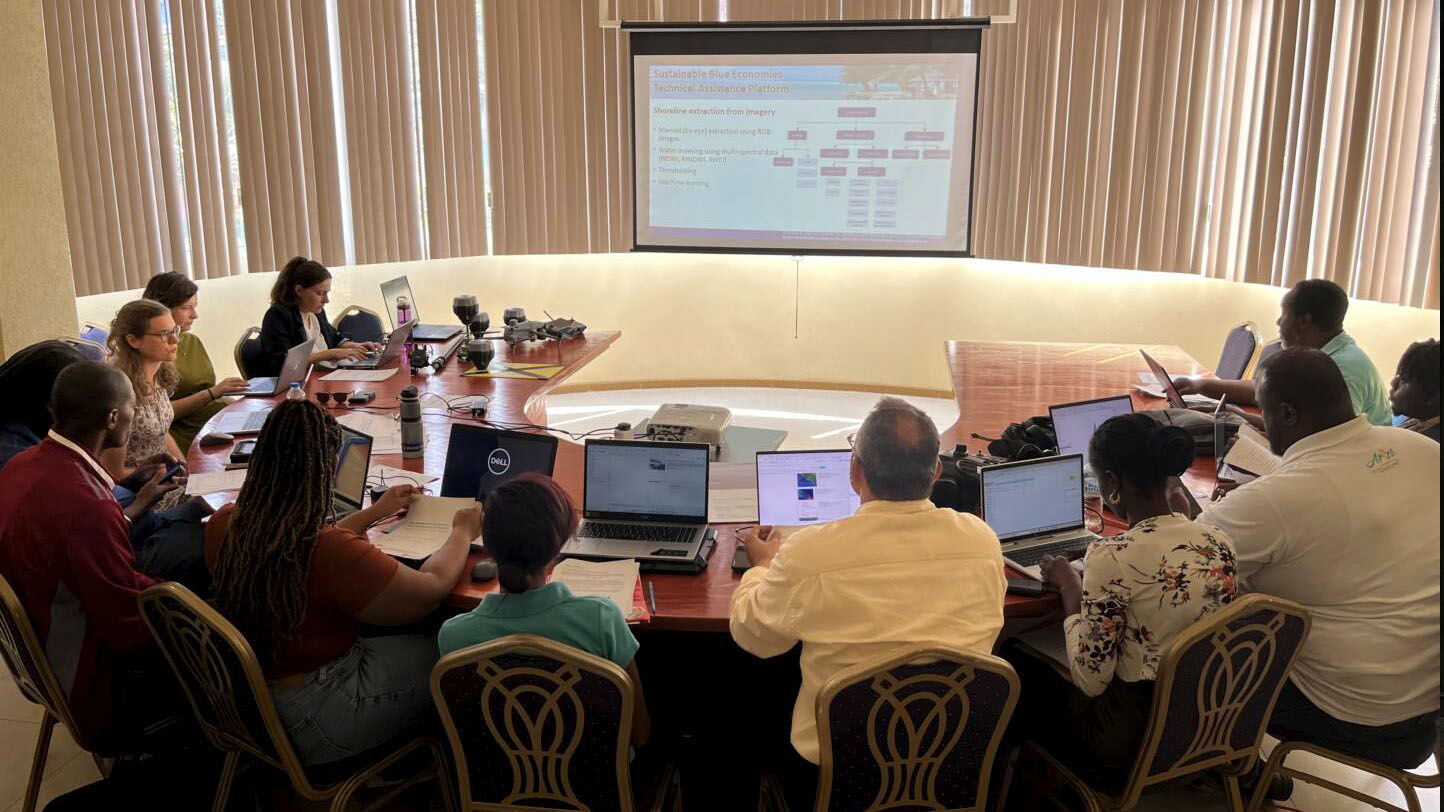
The project, delivered through the UK’s Sustainable Blue Economies Technical Assistance Platform, will train communities in St Patrick, Carriacou and Petite Martinique to use drone and satellite navigation technology to measure and understand how their coastlines are changing. A 15–70-year shoreline dataset and nationwide analysis framework will give Grenada’s planners and policymakers the evidence they need to adapt or protect fish markets, boat yards, roads and coastal infrastructure identified by local communities as at risk.
Resident British High Commissioner Victor Clark said, “The UK is proud to partner with Grenada to strengthen coastal-erosion monitoring. With so many communities, livelihoods, and essential services located along Grenada’s coastline, reliable data is vital for planning and development. By providing the tools, training and long‑term data needed to understand how coastlines are changing, this project empowers local organisations and youth groups while strengthening national planning for climate resilience and opening doors for climate finance.”
Coastal erosion is a serious and growing threat to Grenada. In 2023, Hurricane Beryl caused an estimated $218 million in economic losses — equivalent to 16.5% of GDP — devastating the islands of Carriacou and Petite Martinique. Yet reliable, nationwide data on erosion rates has until now been scarce, limiting effective disaster planning and economic resilience.
By training local NGOs and communities directly, including youth associations and women’s groups, the project takes a train-the-trainers approach with NGOs and government to ensure knowledge and equipment remain in communities for the long term. GPS survey equipment will be accessible to communities, including on Carriacou and Petite Martinique, to empower local communities through data collection (knowledge/data is power) whilst simultaneously contributing to national records used by planners and policy makers.
The project provided survey-grade Geographic Information Systems (GPS) units and a survey drone (including photogrammetry software) that will enable the Government of Grenada to continue to survey the coast to inform ongoing future plans. The full list of items donated to the government includes 4 GPS receivers, one professional-grade laptop, one drone, photogrammetry software and associated support equipment.
Honourable Kerryne James, Minister for Climate Resilience, the Environment and Renewable Energy, said: “Our partnership with the UK equips our coastal communities — from Palmiste, St John to Petite Carenage, Carriacou — with cutting-edge tools and training to monitor coastal erosion firsthand. By empowering locals, youth, and NGOs with GPS and drone technology, we are building resilient coastlines, promoting ecosystem-based adaptation and nature-based solutions critical to safeguarding our fisheries and tourism livelihoods and coastal infrastructure. By strengthening Grenada’s evidence base, we guide effective interventions. Knowledge truly is power, and this project delivers it directly to our people.”
Principal Scientist Dr Tony Dolphin, from the UK government’s Centre for Environment, Fisheries and Aquaculture Science, is leading the SBE ShoreSecure project in collaboration with the Environment Division of the Ministry of Climate Resilience, the Environment and Renewable Energy. He said, “This initiative will deliver vital data on coastal erosion across the country and provide communities with simple, but effective, beach survey tools and training. These resources help local people track changes and supply valuable information for planners and policymakers, filling a gap in available evidence. The project also addresses how climate change-related coastal erosion affects community wellbeing.”
The project is well aligned with Grenada’s National Sustainable Development Plan 2035 and Grenada’s National Ecosystem Assessment (NEA). It directly supports Grenada’s Integrated Coastal Zone Management policy, Climate Change Policy and key adaptation and mitigation policy documents promoting Ecosystem-Based Adaptation (EBA) and Nature-Based Solutions (NBS). Most importantly, it is strengthening the government’s evidence base for climate adaptation decisions across tourism, agriculture and fisheries.
This work reflects the UK government’s commitment to drive sustainable growth and support climate resilience internationally, protecting the livelihoods and communities most exposed to the effects of a changing climate.
Danny Moonie
OECS Communications Unit