The OECS Commission and Partners Supports Grenada’s Sea Moss Transformation
OECS Press Release
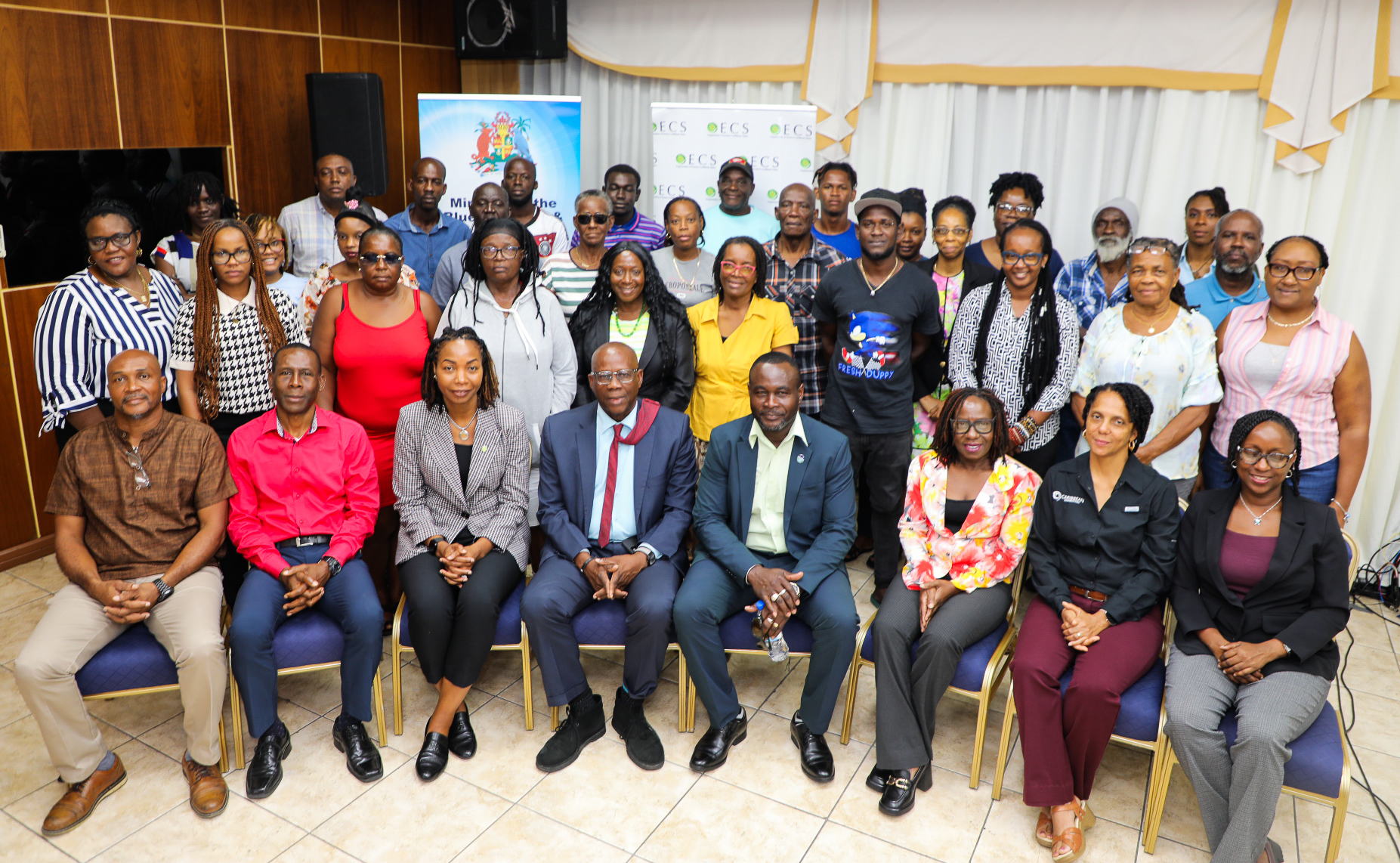
The Organisation of Eastern Caribbean States (OECS) Commission in collaboration with the Ministry of the Blue Economy and Marine Affairs of Grenada has successfully hosted a Capacity Building Workshop to Support the Sea Moss Industry in Grenada. The three-day initiative, held from 26–28 January 2026, combined technical training sessions with a field visit, equipping stakeholders with practical knowledge in production, harvesting and post-harvesting practices, food safety, product development, marketing, and business management.

Permanent Secretary in the Ministry of the Blue Economy and Marine Affairs, Mr. Jarvan Williams, underscored the Government of Grenada’s commitment to expanding the sector:
“Our 2026 budget outlines clearly a strategic objective to improve on our mariculture and sea moss is our target. It falls directly inline with our food security and it falls directly inline with the FAST Programme from the OECS.”

The OECS Commission has mobilised development partners to strengthen agricultural resilience and advance the Food and Agriculture Systems Transformation (FAST) Programme across the region. Central to this initiative is the Caribbean Biodiversity Fund (CBF), a key partner in the regional architecture for biodiversity and sustainable finance. Through the Caribbean Regional Architecture for Biodiversity (CRAB) Project, funded by Agence Française de Développement (AFD) and Le Fonds Français pour l’Environnement Mondial (FFEM), the workshop was a key step in supporting Grenada’s thriving sea moss sector. Technical Officer for the CRAB Project, Ms. Theresa Erin Sanderson, explained the project’s role:
“CRAB stands for Caribbean Regional Architecture for Biodiversity. It is a French government funded project that is helping NGO's across the Caribbean build capacity and become stronger. It's also giving grant funding for projects in conservation, biodiversity and in sea moss farming. We also work very closely with the OECS Commission to implement these projects across the region”

Officer in Charge of the Economic Development Unit at the OECS Commission, Mrs. Natasha Deterville-Moise, reaffirmed the organisation’s dedication to advancing a resilient and thriving blue economy across its Member States:
“This event is more than just a workshop; it is a tangible step in the OECS commitment to building a resilient and thriving blue economy across our Member States. We recognize the immense potential of the sea moss sector not only as a source of livelihood but also as a cornerstone of our marine ecosystems and coastal resilience.”

Delivering the Feature Address at the opening ceremony, Hon. Lennox Andrews, Minister for the Ministry of the Blue Economy and Marine Affairs, highlighted the government’s broader vision for inclusive and sustainable growth:
“Today’s event is a training exercise, but it is also a tangible expression of the government’s greater commitment to bolstering and expanding blue economy livelihoods into ones that are inclusive, sustainable, and resilient. This marks another step in fostering economic development, climate resilience, and food security at the national level.”
Minister Andrews further emphasised the strategic importance of the sector:
“The sea moss industry represents a delicate interplay of conservation practices, climate adaptation, livelihood protection, and entrepreneurship. It provides a distinct opportunity to develop and diversify a high-value marine resource that contributes significantly to employment, export potential, and revenue generation. Recognizing this, the Government of Grenada in the 2026 Revenue and Expenditure Estimate has prioritized sustainable fisheries, aquaculture and mariculture as key growth areas within the blue economy, thus aligning squarely with national strategic pillars and policies.”
This three-day workshop marks a significant milestone in Grenada’s journey to transform its sea moss industry into a driver of sustainable growth and resilience. By combining technical training, business development, and strategic partnerships, the initiative underscores the OECS Commission’s and the Government of Grenada’s shared vision of a blue economy that is innovative, inclusive, and future-ready.


Marvin St. Louis
OECS Communications Unit