.png)
OECS SKIP Advances Regional Education Data Transformation Through Applied Data Governance Framework Workshop
OECS MEDIA RELEASE
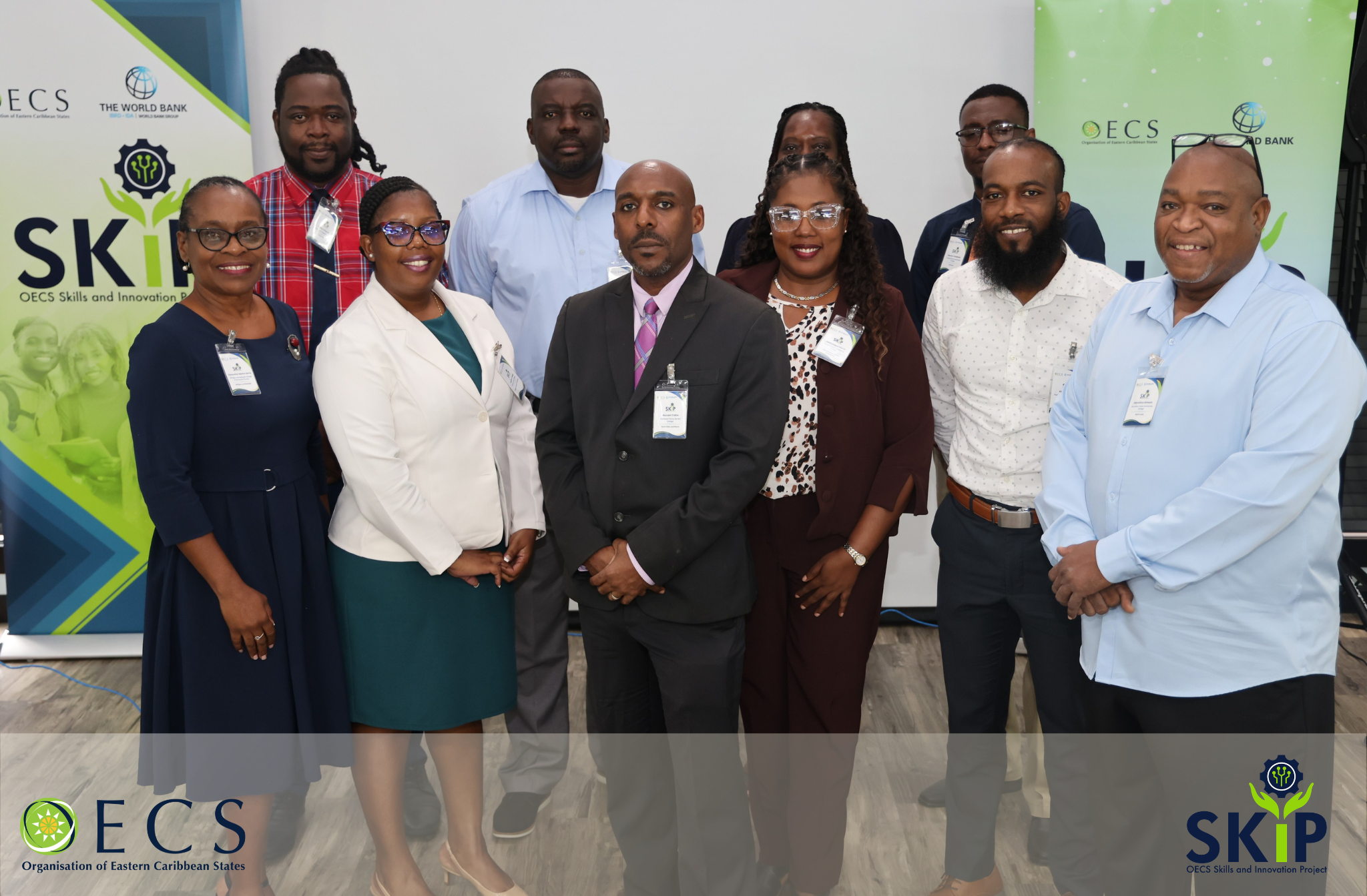
The Organisation of Eastern Caribbean States (OECS) Skills and Innovation Project (SKIP) is advancing efforts to strengthen how post-secondary education data is collected, governed and used across the Skills region. The World Bank-funded OECS SKIP successfully convened the Applied Data Governance Framework Workshop for the Regional Post-Secondary Interoperable Education Management Information System (EMIS). Bringing together post-secondary institutions, education stakeholders, technical specialists, and the OECS Software Development Team from across nine OECS Member States, the OECS SKIP workshop translated previously developed governance and system frameworks into practical tools, technical specifications, and institutional actions needed to move the regional system toward implementation.
The five-day workshop contributes significantly to the project's ongoing work to strengthen regional systems supporting skills development, innovation and improved education outcomes. Through this component of the project, the OECS Commission is developing a regional, interoperable approach that will allow post-secondary education information to be collected more consistently, compared and used across participating Member States, while respecting institutional ownership and national control of data.
The workshop represented an important progression for this work, moving from the development of architecture, requirements and governance models to the creation and testing of the systems, standards and institutional processes required to operationalise them. Over the course of the week, participants worked through the governance, technical and institutional requirements for the regional EMIS. Among the key achievements was the development and validation of a shared reporting structure to improve consistency in the way post-secondary institutions report education data across the region.
The OECS SKIP Applied Data Governance Framework Workshop also advanced the Regional Metadata Registry, which establishes common definitions and approved values for key data fields, as well as validation rules designed to improve the quality and comparability of information submitted by institutions. These standards will help ensure that indicators and terms used by different institutions carry the same meaning when aggregated for regional reporting.
A working data aggregation Minimum Viable Product (MVP) was also demonstrated during the week. The system allows institutions to validate and aggregate their information locally before approved data is transmitted to the regional level. A Regional Unique Learner Identifier (RULI) was additionally developed to support more accurate counting of learners while protecting personally identifiable information.
Importantly, the emerging architecture is being built around the principle of data sovereignty. Higher education institutions retain ownership and control of their information, personal learner data remains at the institutional level, country-level authorities govern its release, and the OECS Commission receives only approved aggregate information required for regional reporting.
Reflecting on the progress achieved through the workshop, Dr Didacus Jules, Director General of the OECS underscored the wider significance of building regional systems that enable Member States and institutions to work collectively while retaining ownership of their data.
“The progress being made through OECS SKIP demonstrates what regional integration can achieve when we combine our expertise, institutions and technology around a common purpose. By strengthening the systems that allow us to generate and use trusted education data, we are building the foundation for better decisions, stronger institutions and a more responsive regional education ecosystem.”
Beyond the technology, the workshop addressed one of the critical requirements for successful digital transformation: the readiness of institutions themselves.
Participating post-secondary institutions assessed their current capacity using a four-tier readiness framework, identifying differences in systems, processes, staffing and data-governance maturity across the region. This will allow implementation support to be calibrated to institutions' circumstances rather than applying a single solution to organisations at very different stages of digital development.
Institutions also began developing data-governance policies defining responsibilities for data quality, reporting, approval and accountability. These individual contributions were subsequently consolidated into a draft regional data-governance policy template, which will be customised according to institutional circumstances and national legal requirements.
Commenting on the importance of these outcomes for the region's education sector, Mrs Sisera Simon, Head, Human and Social Division, OECS Commission, highlighted the value of strengthening both institutional capacity and the quality of information available to guide education planning. She stated:
“Reliable data is fundamental to understanding where our education systems are, where the gaps exist and where our interventions can have the greatest impact. The work advanced through this engagement brings us closer to a regional system that strengthens institutional capacity while giving Member States better information to plan, respond and improve outcomes for learners across the OECS.”
Together, these outcomes establish a stronger foundation for reliable and comparable post-secondary education data across the OECS. Better-quality regional information can strengthen education planning, support evidence-based decision-making and improve the region's ability to understand participation, completion and other education indicators that inform policies and investments.
For institutions, the emerging system is also intended to reduce fragmented and repetitive reporting by creating more standardised processes and providing participating institutions with access to their own data and dashboards.
The World Bank-funded OECS SKIP Applied Data Governance Framework Workshop for the Regional Post-Secondary Interoperable Education Management Information System (EMIS) additionally demonstrated the growing contribution of regional technical expertise to the digital transformation agenda. The OECS Software Development Team produced and demonstrated key elements of the technical configuration, including validation tools, the learner identifier generator and the data aggregation platform.
The development of these digital platforms now moves into the next implementation phase. Participating institutions are expected to review their draft governance policies internally and provide feedback, while governance focal points will consider the consolidated regional policy ahead of its presentation to the 7th OECS Higher Education Meeting for ratification. Development of version 1.0 of the platform will also continue, alongside institution-specific implementation work and pilots for institutions requiring foundational EMIS support.
The progress achieved through the OECS SKIP Applied Data Governance Framework Workshop for the Regional Post-Secondary Interoperable Education Management Information System (EMIS) moves the OECS closer to a regional education data environment in which institutions can retain control of their information while contributing trusted, standardised data for collective planning and decision-making.
Through World Bank-funded OECS SKIP, the OECS Commission continues to support the development of the systems, institutional capacity and regional collaboration required to strengthen skills development and innovation across the region.

.JPG)


.JPG)


Malika Thompson-Cenac
OECS Communications Unit