OECS Root and Tuber Crop Symposium Charts Plans to Reclaim Food Sovereignty
OECS Press Release
In an era of global uncertainty and escalating climate crises, the Organisation of Eastern Caribbean States (OECS) Commission and the Government of the Commonwealth of Dominica have launched a definitive regional intervention to reclaim food sovereignty. This initiative transforms the root and tuber crop sector into a central pillar of climate resilience and economic strength, embodying the belief that true security begins with the ability to feed ourselves.
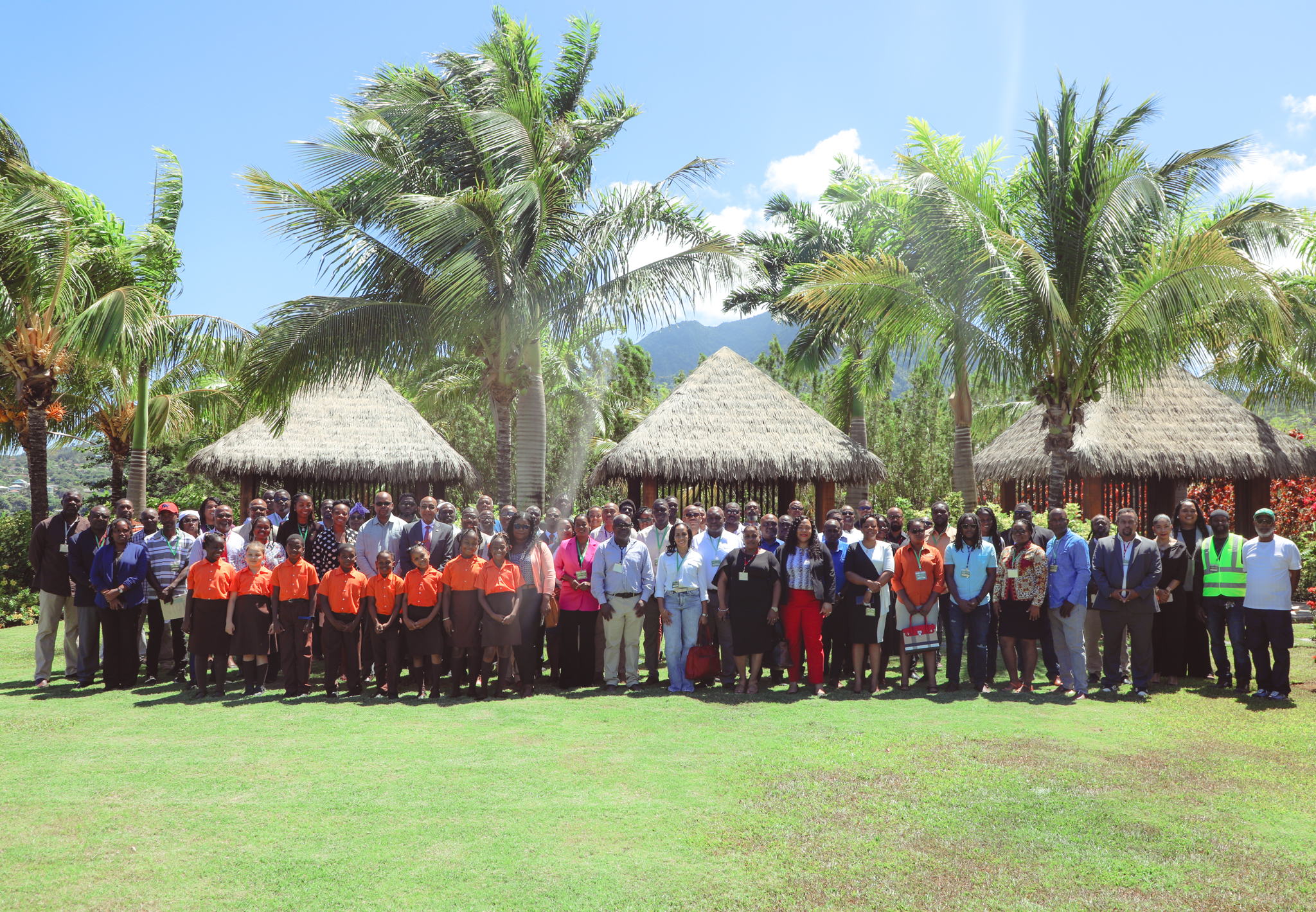
The OECS Root and Tuber Crop Symposium, held from May 7–8, 2026, at the InterContinental Dominica Cabrits Resort & Spa, brought together policymakers, farmers, and technical experts to reposition local staples as high-value economic drivers under the OECS Food and Agriculture Systems Transformation (FAST) Strategy. This initiative was supported by the European Union through the 11th European Development Fund (EDF) through the Regional Integration Through Growth Harmonisation and Technology (RIGHT) programme.
This strategic intervention comes as the region faces critical vulnerabilities, with food import bills reaching up to 90% in some Member States. The symposium emphasises a shift from simple food security to true food sovereignty, aligning with the CARICOM “25 by 2025 + 5” mandate to reduce regional food imports by 25%.

Representing Prime Minister Hon. Roosevelt Skerrit, Hon. Dr. Irving McIntyre, Minister for Finance, Economic Development, Climate Resilience and Social Security highlighted the essential link between agricultural self-sufficiency and national stability.
“The Government of Dominica has consistently emphasized the importance of resilience as a central pillar of national development,” Dr. McIntyre stated. “That vision of resilience extends directly to agriculture, because no country can truly claim resilience while remaining heavily dependent on imported food and vulnerable supply chains”.
He further extended recognition to regional farmers whose hard work and resilience continue to sustain our communities despite increasingly difficult conditions.

OECS Director General, Dr. Didacus Jules, framed the symposium as a return to first principles and human dignity.
“If we cannot feed ourselves, we are not truly secure,” Dr. Jules cautioned. He described crops like cassava, dasheen, and sweet potato as poetically resilient, noting they grow quietly, steadily, beneath the surface drawing strength from the soil, holding firm against wind and drought.
Dr. Jules emphasized that the OECS's strength will not come from what is distant and imported, but from what is near and rooted.
The urgency of this transformation is underscored by the increasing frequency of climate-related shocks. Hon. Roland Royer, Dominica’s Minister for Agriculture, Fisheries, Blue and Green Economy, noted that only days prior to the event, flooding and landslides on Dominica’s east coast caused extensive damage to crops and infrastructure.

“Agriculture today must be understood as business, innovation, food security and national resilience all working together,” Minister Royer asserted. “If agriculture in the OECS is to survive and grow, then it must become more resilient, more sustainable and more adaptable to the realities of a changing climate”.
The event also highlighted how these crops are part of our culture and offer great business opportunities. Hon. Fenella Wenham-Sheppard spoke to the generational importance of root crops, stating they have sustained Caribbean people through storms and economic shocks.
“Root crops must not only feed us fresh from the soil, they must become higher value products that create jobs, expand exports, and empower entrepreneurs,”

she noted. She highlighted the untapped economic potential in transforming these staples into flour, purees, and beverages.
Key outcomes of the symposium include the operationalization of the OECS Food Production Technical Working Group and the development of an OECS Root and Tuber Crop Roadmap. Additionally, the region will prioritise infrastructure support, such as solar-powered cold storage and irrigation hubs, to build a modernised, profitable agricultural sector capable of attracting a new generation of Caribbean farmers.


Marvin St. Louis
OECS Communications Unit