OECS Regulatory and Border Control Agencies Receive Specialized Training on Risk Management for the Movement of Goods
OECS Press Release
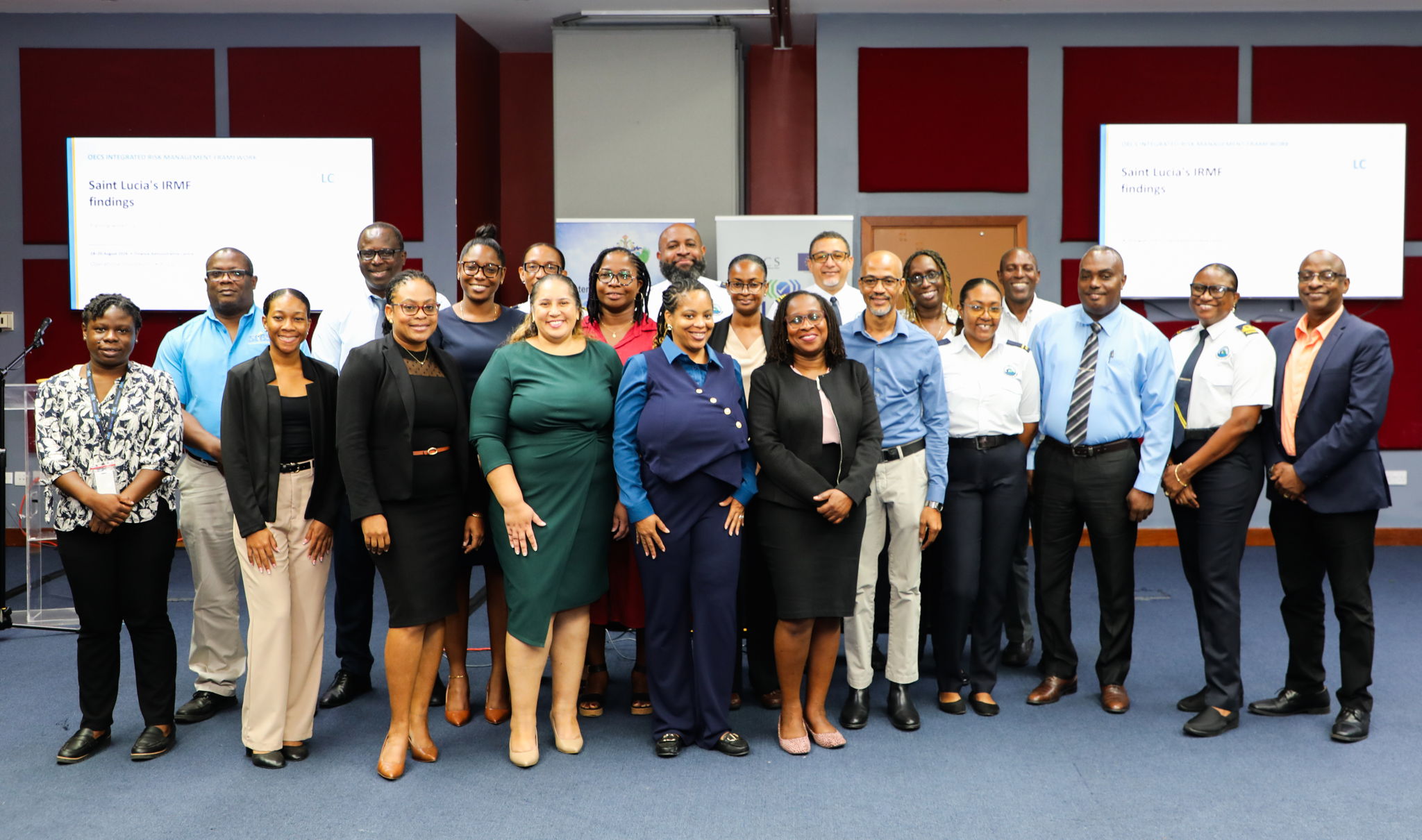
Officials from across Saint Lucia’s regulatory and border control agencies were the latest to benefit from a specialised three-day training and capacity-building workshop aimed at transforming national ports of entry for goods into highly coordinated, efficient intelligence-led gateways.
The workshop, which was held at the Finance Administrative Centre in Castries from August 18 to 20, 2026, focused on improving the knowledge and understanding of risk management procedures and systems for the movement of goods across Saint Lucia’s border. The training has been held across the seven OECS Protocol Member States and is part of work to establish a unified OECS external border for a functioning customs union with free circulation of goods.
Under the coordination of the OECS Commission, the initiative targeted frontline, supervisory, and coordinating officers from Customs, Agriculture (plant and animal health), Health (human and environmental), Standards, Police, and Port Authorities responsible for regulating the movement of goods. The critical training was funded by the European Union (EU) through the 11th EDF Regional Integration through Growth Harmonisation and Technology (RIGHT) Programme, and was facilitated by a team of regional experts under AENOR Consulting.
Mr. Ricardo James, Head of Trade Policy Development at the OECS Commission speaking virtually to the participants at the opening, underscored the regional magnitude of this integration.
"Among the protocol member states, we have achieved significant progress in the free movement of people, supported by a single currency and a single court. But the customs union is our next great frontier. We are replacing seven independent customs territories with one single customs territory. Once goods enter any official point of entry, they enter the entire economic union."
For Saint Lucia, the specialised training was seen as timely and aligned with national reforms and international compliance standards. Mr. Sherman Emmanuel, Comptroller of the Saint Lucia Customs and Excise Department welcomed the OECS Commission’s invaluable technical assistance, noting that risk management is the engine of border efficiency.
"Our Risk Management framework will be central to improving border management efficiency and effectiveness. It is key to achieving greater control of high-risk consignments and travelers while facilitating compliant traders and travelers."
The Comptroller noted that the implementation of these measures is also a direct requirement under Article 7.4 of the World Trade Organization (WTO) Trade Facilitation Agreement. Mr. Nigel Edwin, representing AENOR, reminded officers that modern border management requires a profound shift in mindset from isolated operations to an integrated, whole-of-government network.
"Facilitation does not mean the absence of control. Rather, it requires us to apply controls more intelligently concentrating our resources on high-risk persons, goods, and activities while allowing legitimate trade and travel to move more efficiently. This is not simply a Customs initiative; it is a collaborative effort."
Over the course of the training, officers examined Saint Lucia’s existing border management structures, identified legal and operational gaps, and refined a national roadmap designed to support the forthcoming regional pilot program.
By moving from diagnostic plans to practical, functioning systems, Saint Lucia is positioning itself as a leader in regional integration, preparing the way for a more resilient, globally competitive, and sustainable OECS Economic Union.


Marvin St. Louis
OECS Communications Unit