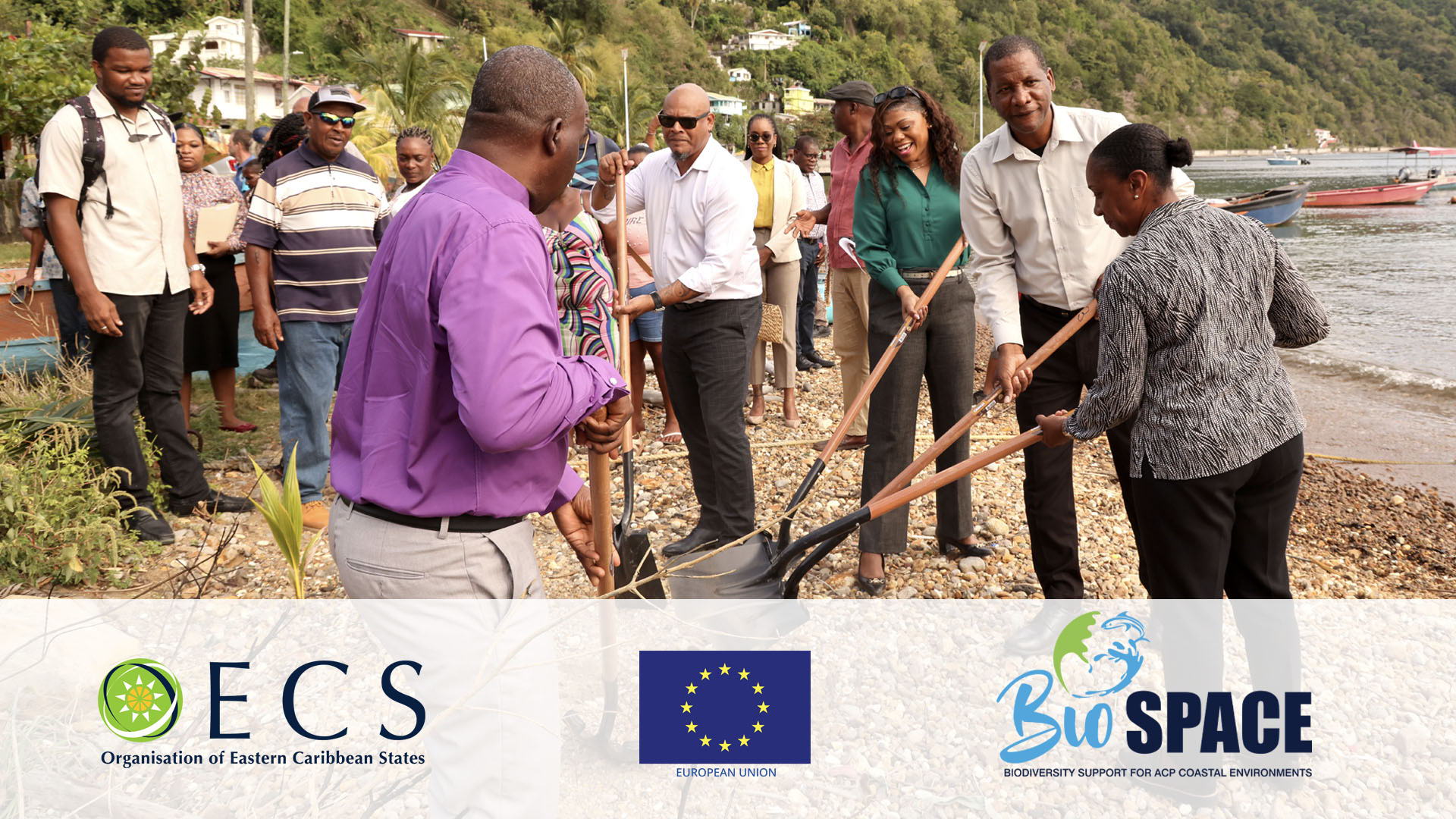
OECS Launches New Wastewater Project to Protect Marine Life in Dominica
OECS Media Release
Protecting marine biodiversity involves addressing land-based issues that directly affect our oceans, including the proper disposal and management of grey and black wastewater. Grey water refers to wastewater generated from everyday household activities such as bathing, washing, and cleaning, while black water contains human waste and harmful pathogens and requires more advanced treatment.
The Organisation of Eastern Caribbean States (OECS) Commission, in partnership with the Government of the Commonwealth of Dominica and with funding from the European Union (EU), officially launched works on April 1 for the construction of small instream wetlands and the installation of septic tanks in Soufrière (Sauce) under the BioSPACE Project.
This initiative, valued at approximately EC$2.23 million, marks a significant step toward improving wastewater management, reducing environmental contamination, and safeguarding the coastal and marine ecosystems that support livelihoods, fisheries, and tourism in the Soufrière community.
Speaking at the ceremony, BioSPACE Project Manager, Ms. Norma Cherry-Février, highlighted the importance of the initiative in strengthening biodiversity conservation and climate resilience across OECS Member States. She mentioned that the project is rooted in community engagement, noting that consultations held in 2023 helped shape both the design and implementation approach.
“This initiative reflects our shared commitment to protecting the ecosystems that sustain our communities,” she noted, adding that improved wastewater treatment will directly benefit coastal and marine resources vital to local livelihoods.
Parliamentary Representative for the Soufrière Constituency and Minister for Tourism, International Transport, and Maritime Initiatives in Dominica, Honourable Denise Charles-Pemberton, described the project as a transformative investment in the community’s future. She affirmed that the project will significantly reduce the flow of untreated wastewater into Soufrière Bay, helping to preserve marine biodiversity and strengthen the local blue economy.
“This sea… is our gem, it’s our future. When our seas are protected, our fishers can fish, our tour operators can thrive, and our young people can see a future right here at home within the blue economy,” she stated. She continued, “This project will result in improved sanitation and a significant reduction of contaminated water entering the Soufrière Bay, ensuring the protection of our marine biodiversity.”
Minister for Environment, Rural Modernisation, Kalinago Upliftment and Constituency Empowerment, Honourable Cozier Frederick, reinforced the importance of balancing development with environmental stewardship. He stated,
“We have a gift from nature, and we are living in that space, but we have to play our part. This project shows that we can balance development with the protection of our natural resources.”
He further highlighted that the project integrates both engineered infrastructure and nature-based solutions, demonstrating how sustainable practices can protect ecosystems while supporting community growth. “This is about maintaining the integrity of our ecosystems while enabling development,” he stated, urging residents to take collective responsibility for environmental protection and proper waste management.
The works are being executed by EnviroPlus Consulting Inc., with supervision by Alpha Engineering & Design (2012) Ltd. The contractor indicated that over 90% of the workforce has been sourced from the local community, reinforcing local ownership and economic participation.
The project utilises environmentally engineered solutions, including filter bed systems and plant-based biological treatment processes, to naturally treat grey and black water before it reaches coastal areas. It will also involve inspection and upgrading of existing septic systems to reduce pollution entering waterways.
The Dominica Solid Waste Management Corporation has been working with the OECS BioSPACE team on this initiative and also partnered with the Soufrière Scott’s Head Marine Reserve, the Department of Fisheries, and community stakeholders whose ongoing collaboration is critical to the project’s success.
The OECS Commission expressed its appreciation to the European Union for funding the BioSPACE Project, which continues to support Member States in advancing biodiversity conservation and the sustainable management of terrestrial, coastal, and marine resources.


Danny Moonie
OECS Communications Unit