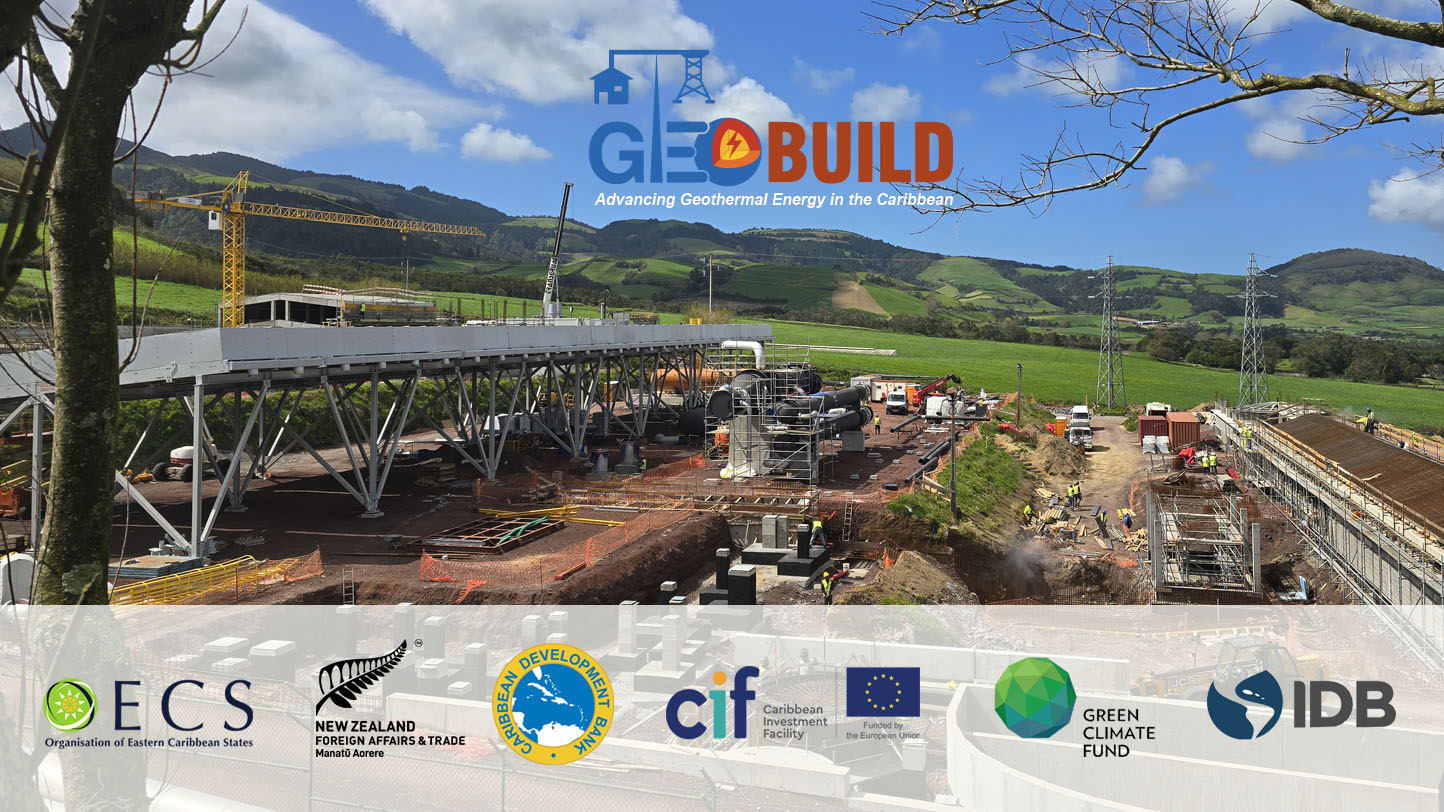
OECS GEOBUILD Advances Global Geothermal Partnerships
OECS Media Release
The Organisation of Eastern Caribbean States (OECS) Commission successfully concluded a strategic technical mission to Europe, marking a pivotal advancement in the "South-North" exchange of geothermal expertise. Represented by the OECS GEOBUILD Programme, the delegation engaged in a high-level study tour across the Azores and Canary Islands from April 14 to 22, 2026, capped by featured presentations at the Global Sustainable Islands Summit (GSIS) Summit 2026.
Supported by the European Union Global Gateway Euroclima programme, the mission aimed to synchronize European technological innovation with the specific energy requirements of the Caribbean. Dr. Ernie Stapleton, GEOBUILD Project Manager, was part of the Caribbean delegation and attended as part of the Commission’s broader mandate to accelerate geothermal deployment through global partnerships.
Knowledge Exchange: Azores and the Canaries
The study tour offered the delegation a comprehensive look at the logistical and operational nuances of island-based geothermal systems. Key areas of focus included:
- Operational Excellence: Observing drilling techniques and power plant management within volcanic landscapes similar to those in the Eastern Caribbean.
- R&D and Regulation: Analysing frameworks for maintenance, monitoring, and institutional knowledge building.
- Direct-Use Innovation: Investigating geothermal applications beyond the grid, including heating for agriculture and industrial processes.
- Grid Stability: Developing strategies to integrate renewable energy into isolated, small-island power grids.
Strategic Advocacy at GSIS Summit 2026
On April 22, the GEOBUILD Programme participated in a number of global panels in Gran Canaria. Dr. Stapleton joined the Geothermal Energy Forum panel, “De-risking Island Geothermal: Overcoming Technical Barriers from Exploration to the Grid.”
During the session, Dr. Stapleton called for the institutionalisation of the Contingent Recoverable Grant (CRG) as a permanent financial fixture to mitigate high-risk exploration phases. He also proposed a new targeted mechanism to subsidise drilling mobilization, arguing that such interventions are vital to lowering upfront capital costs and reducing the eventual electricity tariffs for Caribbean consumers.
Additionally, the International Geothermal Association (IGA) invited GEOBUILD to an exclusive "Geothermal Policy Lab: Aligning governance for geothermal deployment in island contexts," which focused on:
- Licensing & Access: Creating streamlined pathways from resource discovery to commercial use.
- ESG Standards: Ensuring ecological protection and community engagement.
- Economic Resilience: Tailoring financial models to the unique scale of Small Island Developing States (SIDS).
"To unlock the geothermal potential of the Eastern Caribbean, we must implement fit-for-purpose regulatory frameworks and innovative financing that reflect our unique island realities," stated Dr. Stapleton. "Regional collaboration remains our strongest tool for ensuring energy security and climate resilience."
Driving the Energy Transition
The OECS Commission views this mission as a vital catalyst for the region’s green transition. The data and partnerships secured in Europe could directly enhance the technical advisory services provided to OECS Member States, positioning the Eastern Caribbean as a leader in sustainable energy.
The Commission expresses its appreciation to the European Union and its partners for their continued support in fostering this enduring trans-Atlantic partnership.
About the OECS GEOBUILD Programme
GEOBUILD is a collaborative initiative funded by the Caribbean Development Bank (CDB), the Inter-American Development Bank (IDB), the European Union Caribbean Investment Facility (EU-CIF), and the Green Climate Fund (GCF). It provides specialized technical assistance to OECS Member States to catalyse geothermal development and sustainable economic growth.


Danny Moonie
OECS Communications Unit