OECS Commission Provides Support to Saint Vincent and the Grenadines Digital Transformation Efforts
OECS Press Release
The Organisation of Eastern Caribbean States (OECS) Commission has reaffirmed its commitment to advancing digital transformation across the OECS Community. Recognising the critical role of digital transformation in strengthening modern governance for delivering improved public services and expanding the capacity of the private sector to foster faster economic growth and development, the OECS Commission supports initiatives that will empower Member States to achieve a strengthened digital ecosystem.
In Saint Vincent and the Grenadines (SVG), digital transformation stands at the forefront of the national development agenda, serving as a catalyst for streamlined processes and public service efficiency, enabling stronger citizen engagement, and greater integration within the OECS and the global economy. Through its digital transformation ethos, and with the adoption of a "whole-of-society" approach, Saint Vincent and the Grenadines is focused on investing in agile technological solutions while transforming legal, policy, and governance frameworks to enable an efficient digital ecosystem. As part of these efforts, the OECS Commission, in partnership with the Government of Saint Vincent and the Grenadines, supported a two-day workshop aimed at reviewing and strengthening the legal, policy, and governance frameworks necessary for implementing robust Civil Registration and Unique Identification (UID) Systems.
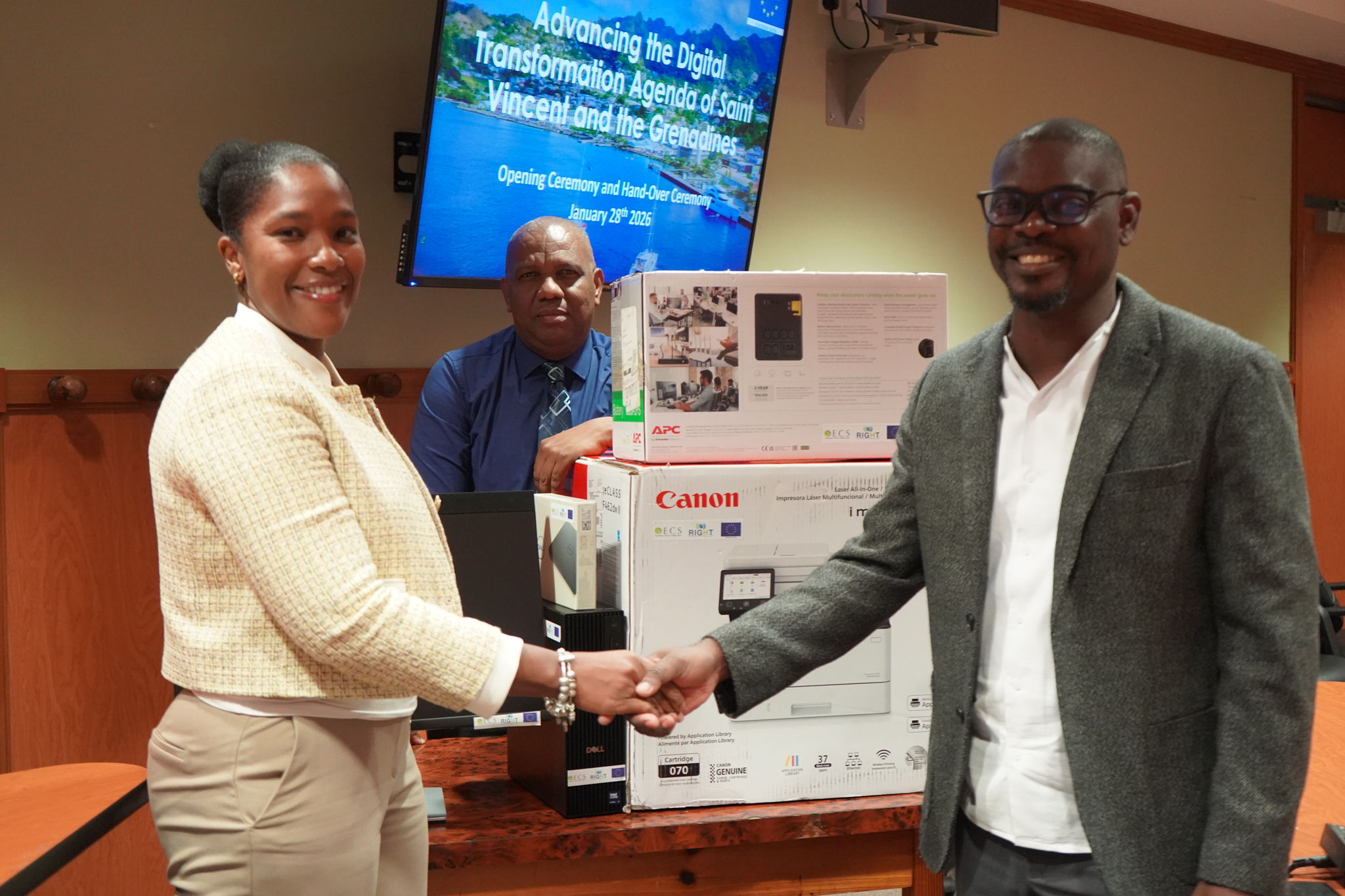
The workshop brought together key stakeholders from government ministries, including the Attorney General’s Chambers, National Security, Immigration, Customs, Civil Registry, Electoral, and Health departments to deliberate on best practices and emerging trends in digital identification and civil registration. Through in-depth consultations and expert-led sessions, participants evaluated existing legislative structures and examined areas for policy decisions and harmonisation. The event also featured the official handover of specialised equipment, designed to support the decentralisation and efficient operation of the civil registration and UID systems across rural and urban areas in Saint Vincent and the Grenadines.
Dr. Didacus Jules, Director General of the OECS, underscored the transformative impact of digital solutions on public sector performance noting that “Digital transformation is not merely a technological upgrade; it is a profound shift in how governments engage with citizens and deliver essential services.” He acknowledges also that “by modernizing civil registration and identification systems, we are laying the foundation for more transparent, agile, and inclusive governance.”
Dr. Clarence Henry, (Acting) Head of the Regional Integration at the OECS Commission, in his remarks at the opening ceremony, acknowledged the vital contribution of the European Union (EU) through the 11th EDF Regional Integration Through Growth Harmonisation and Technology (RIGHT) project. Dr Henry thanked the EU for its continued partnership and unwavering support for this initiative. The EU’s support has been instrumental in addressing legal, policy, and governance gaps and where required, the upgrading of equipment and capacity building for key public sector implementing agencies to realise the shared vision for a digitally integrated OECS community.
Mr Winston George, Coordinator of the Caribbean Digital Transformation Project (CARDTP), highlighted the strategic significance of the UID system in his remarks:
“The Unique Identification System is a cornerstone of Digital Public Infrastructure. It is essential not only for streamlining government operations but also for enabling robust Know Your Customer (KYC) processes in both public and private sectors. This foundational system enhances trust, security, and accessibility, promoting greater confidence in digital services for all Vincentians,”
Ms Shernell Hadaway, Parliamentary Counsel III, speaking on behalf of the Attorney General, the Honourable Sarah Louise Mitchell, emphasised the importance of the workshop to the participants, noting:
“Your insights and expertise are invaluable. The success of the CR/UID systems depends not only on sound technology and good laws, but on broad-based understanding, acceptance, and usage across all spheres – government, civil society, and the private sector.”
The two-day workshop and the equipment handover mark a significant milestone in Saint Vincent and the Grenadines' ongoing digital transformation journey. By reinforcing legal, policy, and governance frameworks and investing in cutting-edge technology, the OECS Commission and its partners are ensuring that Saint Vincent and the Grenadines remains at the forefront of regional innovation and service excellence. These efforts are expected to expedite the rollout of secure, interoperable systems that facilitate access to government services, support economic activity, and position Saint Vincent and the Grenadines as a leader in digital governance within the Eastern Caribbean.
Looking ahead, the OECS Commission will continue to work closely with Saint Vincent and the Grenadines and other Member States to advance digital transformation projects, leveraging regional collaboration and international partnerships. Through sustained investment in technology and human capacity, the OECS Commission remains committed to building resilient, future-ready societies where citizens and businesses alike can thrive in the digital age.


Marvin St. Louis
OECS Communications Unit