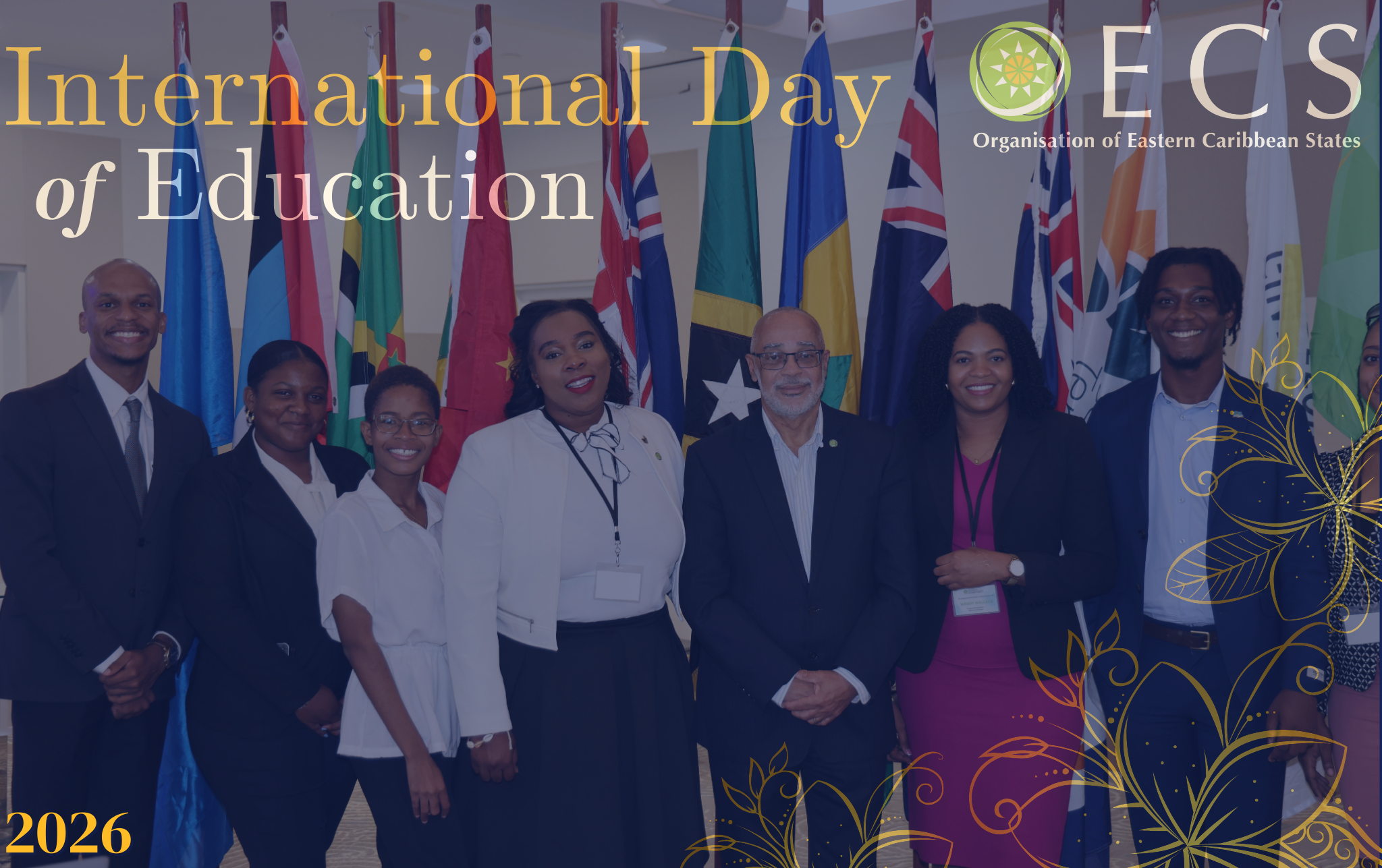
OECS Commission Celebrates International Day of Education 2026: Empowering Youth as Co-Creators of the Future of Education
OECS MEDIA RELEASE
On the occasion of International Day of Education, held under the theme, “The Power of Youth in Co-Creating Education”, the Organisation of Eastern Caribbean States (OECS) Commission joins the global community in celebrating the transformative power of education. The OECS Commission takes this opportunity to highlight the vital role of youth as partners in shaping education systems that are inclusive, digitally enabled, and responsive to the realities of the 21st century. In fulfilment of the OECS’ strategic priorities, the Commission reaffirms its commitment to placing young people at the centre of education reform in the OECS region.
Youth as Partners in Education Transformation
Education transformation in the OECS is anchored in the principle that students and youth are not only beneficiaries of education policy but also active co-creators of learning ecosystems to foster equity, innovation and social cohesion. Through its Education Development Management Unit (EDMU), the OECS Commission is advancing regional initiatives that amplify student and youth voices, strengthen digital learning ecosystems, and support Member States to deliver high-quality and 21st century aligned education.
Key Initiatives to Modernise Education, Improve Access and Learning Outcomes
- Development of the OECS Regional Education Sector Strategy (2027–2037);
- The OECS Digital Learning Ecosystem, which includes the Digital OECS Harmonised Primary Curriculum;
- The upcoming OECS Skills and Innovation Project (SKIP) Knowledge Technology Information Platform (KTIP), Virtual Campus, and Education Management Information Systems (EMIS) which will serve as a tool to operationalise international data standards.
Institutionalising Youth Voice in Regional Governance
The OECS Commission recognises that meaningful youth engagement must be institutionalised within governance and policy processes. Through the OECS Youth Empowerment Strategy (YES), the Commission promotes youth participation across education, civic engagement, healthy lifestyles, and protection.
Complementing this framework, the OECS Youth Advisory Network (YAN) serves as a regional platform for young leaders to advise on policy development and regional initiatives. In a landmark decision, the OECS Council of Ministers: Education and the Council of Youth and Sports agreed to include youth as active participants in high-level education governance meetings, reinforcing the commitment to youth co-creation in regional decision-making.
According to the Director General of the OECS, Dr Didacus Jules, these outcomes emphasise the role of young people in securing the future. He states:
“Young people are not only the future of the OECS, they are also the architects of that future. Through the Student Census and our digital transformation agenda, we are ensuring that youth voices shape policy, practice, and progress.”
The OECS Student Census: Giving Youth a Voice in Education Policy
A flagship example of youth co-creation is the OECS Student Census on Education. The census captures the perspectives of students from Kindergarten to Form 5 on their learning experiences, digital access, well-being, aspirations, and challenges. It directly responds to a mandate from the OECS Council of Ministers: Education to place learners at the centre of regional education planning. The census, which is anonymous and confidential, is currently being administered across OECS Member States, and to date, has been completed by over fifty thousand (50,000) young persons.
Call to Action: Youth Voices Matter
Calling upon the youth to stand and be counted, Head, Human and Social Division, OECS Commission, Mrs Sisera Simon, states:
“We recognise young people not only as learners, but as essential partners in shaping inclusive, relevant, and future-ready education systems. Youth voices, creativity, and lived experiences are critical to reimagining education that responds to today’s social, economic, and technological realities. OECS Youth, let your voice be counted, participate in the Student Census!”
In observance of International Day of Education, the OECS Commission thanks students, parents, educators, youth leaders, and Ministries of Education for their support of the OECS Student Census and the broader youth engagement initiatives.
Happy International Day of Education.


Media contact
Malika Thompson-Cenac
OECS Communications Unit