OECS and Direct Relief Partner to Strengthen Operational Resilience and Emergency Response
OECS MEDIA RELEASE
On March 13 2026, the Organisation of Eastern Caribbean States (OECS) Commission hosted the official handover ceremony of a newly installed solar photovoltaic (PV) system, solar-powered exterior lighting, an upgraded water tank and sewer system at its headquarters in Castries, Saint Lucia. The event marked a significant milestone in strengthening institutional resilience, sustainability, and operational continuity in the face of increasingly severe weather events.
Funded by Direct Relief through the Enhancing Health Infrastructure and Resilience in OECS Member States (EHR) Project, these interventions support both climate action and disaster preparedness by enhancing the OECS' capacity to maintain critical functions and ensure uninterrupted operational and service delivery during emergencies. They contribute to the EHR Project's broader objective of bolstering capacity at national and regional levels to manage and mitigate the impacts of climate change and other hazards.
The solar PV system is designed to reduce dependence on the national electricity grid while ensuring uninterrupted operations during power outages, an essential feature during times of emergency and crisis response. Complementing the energy upgrade, enhancements to the water tank and sewer system significantly improve water storage capacity and sanitation resilience during emergencies when public utilities may be compromised. Additionally, the installation of solar-powered exterior lighting enhances security and safety at the OECS Headquarters.
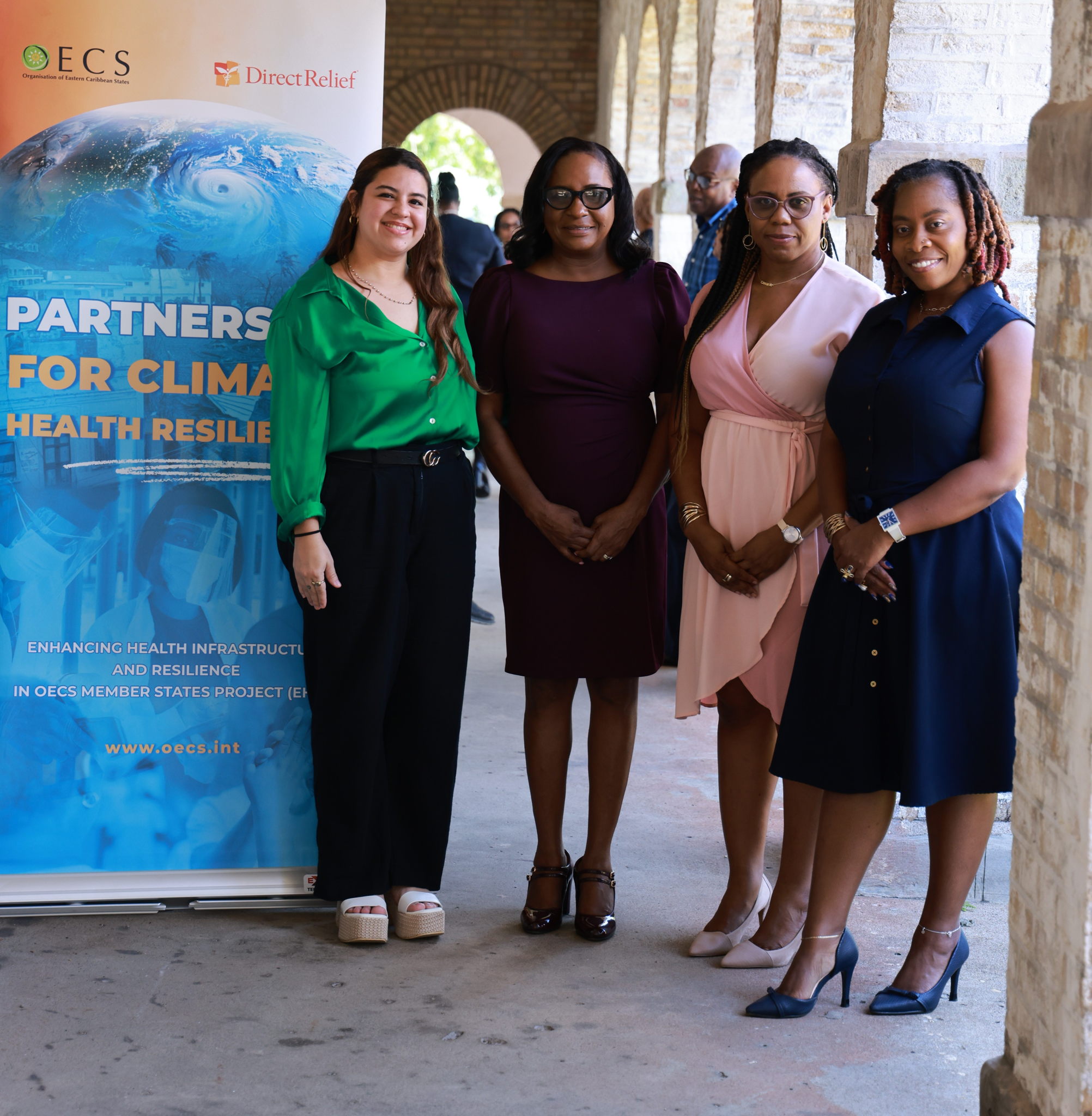
Delivering opening remarks at the handover ceremony on behalf of the Director General of the OECS, Dr Didacus Jules, Mrs Sisera Simon, Head, Human and Social Division, OECS Commission, conveyed appreciation to Direct Relief for its continued partnership and support:
" To our Direct Relief counterparts, this collaboration is a testament to the power of partnerships embodied in SDG 17: Partnerships for Goals. This fundamental aspect of our collaborative initiative underscores the necessity of forming meaningful partnerships while also enhancing our initial capacity."
Mrs Simon also emphasised the importance of resilient infrastructure, stating:
"Our mandate is clear and vital. We coordinate rapid damage assessment, facilitate life-saving rescue and evacuation efforts and execute the bulk procurement of essential medical supplies. However, our ability to deliver on this promise is linked to our operational resilience. We have seen all too often how the fury of a hurricane can paralyse all Member States' water and power lines. For the OECS Commission to remain a beacon of support for the region, we must ensure that our infrastructure remains functional, even when the surrounding environment is incapacitated."
Representing Direct Relief, Ms Ana Umpierre, Communications Coordinator for Public Relations at Direct Relief, reflected on the longstanding collaboration between Direct Relief and the OECS, and its vital contribution to disaster response efforts. She remarked:
"On behalf of Direct Relief it is truly an honour to be here today to celebrate the handover ceremony at the OECS Commission for disaster emergency management. Since 2019 OECS has been an integral collaborator of Direct Relief in emergency response across the Caribbean region, including the duration of more than 40 tonnes of emergency medicine and medical supplies delivered to Member States throughout the different emergencies, including the COVID-19 pandemic. The eruption of La Soufrière Volcano and Hurricane Beryl have been key in completing Direct Relief efforts in emergency response to provide timely assistance. Today, we celebrate another milestone. In our joint efforts to making the Caribbean more resilient and better prepared to withstand future emergencies."
The OECS remains committed to supporting Member States in times of emergency and disaster response, in alignment with its Strategic Priorities and its broader mandate of regional integration. The milestone handover ceremony was concluded with a guided walkthrough of the upgraded facilities.

.JPG)


.JPG)


Malika Thompson-Cenac
OECS Communications Unit