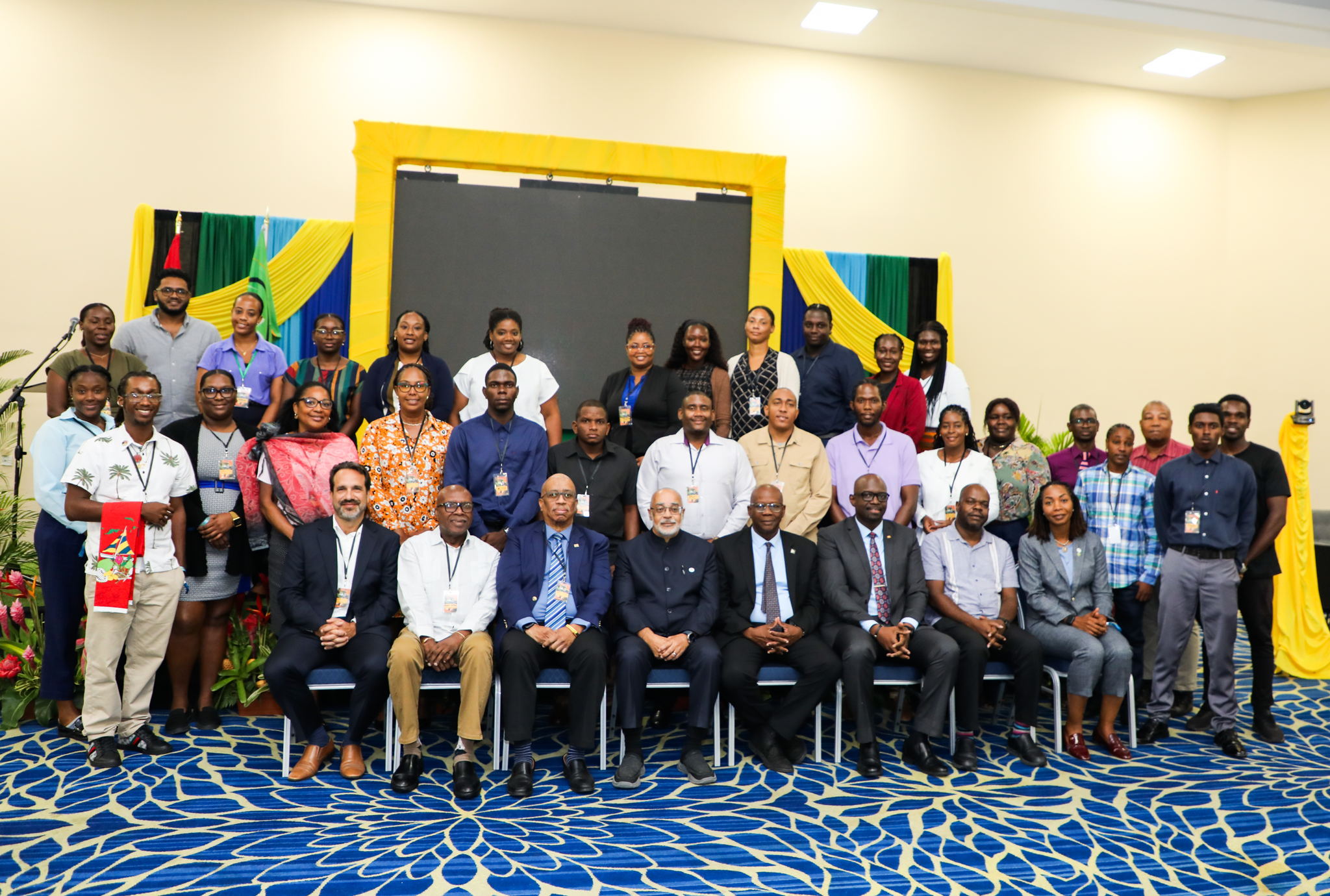
Fruitful discussions, partnerships and tangible action highlight OECS Youth and Women in Agriculture Symposium in Grenada
OECS Press Release
The Organisation of Eastern Caribbean States (OECS) Commission, in partnership with the Government of Grenada, successfully convened the second Youth and Women in Agriculture Symposium from 1 to 3 September 2026, at the Radisson Grenada Beach Resort in St George’s, Grenada. The event signalled an extraordinary turning point for regional food security, bringing together over 150 passionate young farmers, women, and differently-abled agricultural stakeholders from Grenada and across OECS Member States to turn policy discussions into concrete regional trade and structural commitments.
Centering on the theme, “Youth and Women Driving Agricultural Transformation: Sewing Resilience, Reaping Prosperity,” the three-day symposium confronted major regional vulnerabilities. With the Caribbean currently importing the overwhelming majority of its food at an annual cost of US$658 million, regional leaders emphasised that agricultural self-reliance is no longer just an industry preference, but a vital element of regional sovereignty.

Delivering the Feature Address, Grenada's Minister for Economic Development, Planning, Cooperatives, Agriculture, Lands and Forestry, the Blue Economy and Marine Affairs, Honourable Lennox J. Andrews, declared that the old narrative of agriculture as a sector of last resort must end. He called for a shift in perspective, recognising youth and women not merely as labourers, but as highly skilled drivers of technology and business.
"The agriculture of today goes far beyond planting and harvesting. It is about agribusiness, technology, protected agriculture, precision drones, artificial intelligence, and digital marketing. It is about turning a farm into a business and a business into a sustainable enterprise. When we invest in a young farmer, we are not simply helping one individual. We are investing in a household. We are investing in rural communities. We are investing in food security. And ultimately, we are investing in the future of our nation."
Minister Andrews highlighted Grenada’s concrete policy actions, including the Youth Enterprise in Agriculture pilot project developed with the CARICOM Development Fund, and the Land Bank Project to secure agricultural lands through lease arrangements for young persons and prospective farmers.

H.E. DR. Didacus Jules, Director General of the OECS Commission, delivered a powerful address framing the symposium’s urgency within the context of global supply chain disruptions, rising shipping costs, and climate shocks like Hurricanes Ivan and Beryl. The Director General challenged the region to move past ceremonial inclusion and implement structural changes, particularly regarding land tenure, credit readiness, and market integration.
"In a fracturing world, the capacity to feed ourselves is the most concrete expression of sovereignty available to a small state. "A sector does not renew itself; it is renewed by people who choose it. When more than 100 young people volunteered to spend three days discussing agriculture, the question of whether our youth are interested in farming was answered, they were simply waiting to be asked. When we put our young people in a room together, they do not merely network; they trade and that shows commitment and seriousness.”
The symposium highlighted the critical support of international partners, notably the European Union through the 11th EDF RIGHT (Regional Integration through Growth Harmonisation and Technology) programme that financed much of the OECS’s work in the agricultural sector.
Addressing the delegates virtually, Chiara Tardivo, Team Leader for Global Gateway Climate and Energy Investments at the EU Delegation to Barbados, the Eastern Caribbean, and the OECS, reaffirmed the EU's long-term commitment.
"We believe that with climate resilience innovations in agriculture, we can help overcome the high food import bills and better address environmental challenges. We would like to reaffirm our commitment to working with the OECS and Caribbean islands, placing young people, women and youth at the center of the transformation process."

Welcoming the delegates, Natalie Williams, Permanent Secretary in the Ministry of Agriculture, Lands and Forestry, spoke directly to the invaluable, historical legacy of women in food systems.
"The question is, who will carry this world forward? As the farming population ages, we must look to women and youth to lead the next generation.”
Outcomes and Next Steps
The symposium concluded with a strong mandate for actionable deliverables, prioritising four core targets:
- Institutionalisation: Formalising the OECS Agriculture Forum for Youth and Women with an active structure and mandate.
- Information Sharing: Delivering a co-managed OECS-IICA information portal for land markets, grants, and technical guidance.
- Land Access: Securing commitments from ministers to address the land question, offering crown lands on transparent, long-term lease terms that banks can recognize as collateral.
- Structural Inclusion: Ensuring training, funding instruments, and technologies are proactively designed to include persons with disabilities.


Showing 48 of 49
Marvin St. Louis
OECS Communications Unit