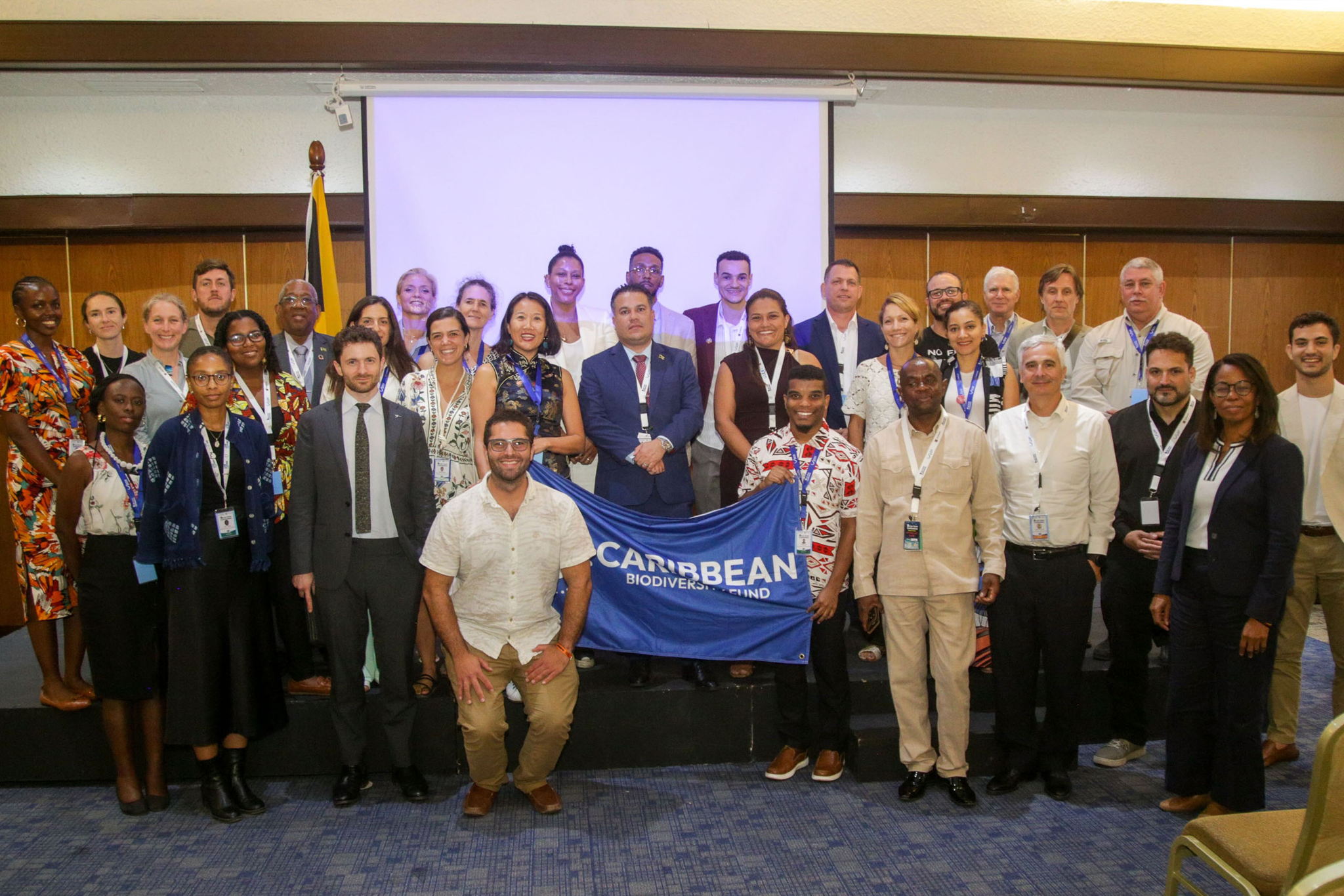
Caribbean Advances Coordinated Ocean Action and Finance at Our Ocean Conference
Media Release Courtesy The Caribbean Biodiversity Fund
Mombasa, Kenya — Caribbean governments, regional institutions, and global partners announced a coordinated package of ocean commitments and financing priorities at the Our Ocean Conference (OOC2026) held in Mombasa, Kenya, from June 16–18, 2026. Convened by the Government of Jamaica, the Ocean Coordination Mechanism (OCM), the Organisation of Eastern Caribbean States and the Caribbean Biodiversity Fund and partners, demonstrated a unified approach to implementing the Kunming Montreal Global Biodiversity Framework.
Jamaica and Barbados signed the Wider Caribbean Ocean Coordination Mechanism MoU, joining the mechanism and bringing total signatures to 22 Countries and 9 InterGovernmental Organizations. Jamaica also signed the Actioning Blue Declaration, a political declaration and roadmap for a regional approach to achieving the global 30x30 target; and the CBF announced the Marine Protected Areas Financing Facility (MPAFF) to the international community and at the Opening Plenary Session of the Conference.
The Honorable Matthew Samuda, Minister of Water, Environment and Climate Change from the Government of Jamaica, said “Jamaica has recognized the OCM as an important regional coordinating mechanism on ocean-related matters and it is for this reason we have decided to become a member of the OCM. Jamaica looks forward to a constructive partnership with the OCM in advancing the global, regional and national ocean agenda”.
Minister Samuda also endorsed the Caribbean Biological Corridor Marine 30x30 Plan as a shared commitment to protect 30% of shared priority marine and coastal ecosystems by Jamaica, Cuba, Haiti, Dominican Republic and Puerto Rico.
Scaling Finance for Implementation
A high-level reception at the conference on June 18 brought together ministers, donors, and partners to focus on mobilizing finance at scale. Discussions highlighted the need to move beyond fragmented and project-based funding toward coordinated and long-term financing. Central to this is the proposed US$250 million Marine Protected Area Finance Facility (MPAFF), which will aggregate regional investment pipelines to incentivize private sector investments; reduce transaction costs for capacity constrained Caribbean countries; and strengthen MPA management and enforcement through the delivery of targeted capacity and sustainable financing packages.
The Caribbean is positioning the Financing Facility as a de-risked and regionally coordinated investment platform for MPAs that will align with existing work on sustainable financing such as the OECS 30x30 Transformation Programme’s Sustainable Financing Roadmap, the Caribbean Biological Corridor (CBC) 30x30 strategy and the Women Ocean Guardianship initiative. This approach enhances the ability for the Caribbean region to act as a unified bloc reducing fragmentation, improving efficiency, and accelerating progress toward biodiversity, ocean and climate goals. With strong leadership, coordinated frameworks, enhanced capacity, policy and a growing pipeline of investment-ready initiatives, the Caribbean is positioning itself at the forefront of global ocean action.


Danny Moonie
OECS Communications Unit